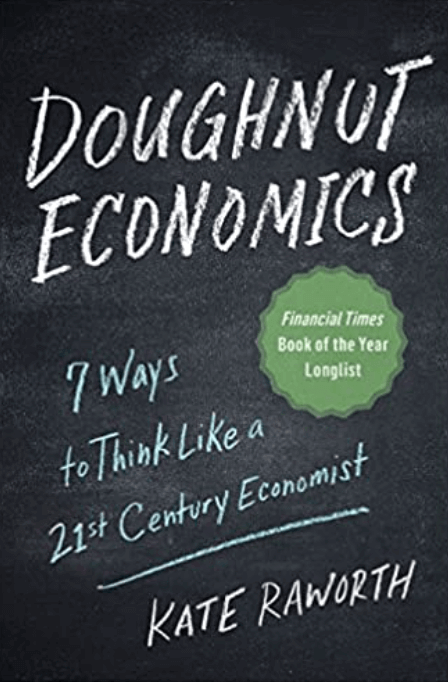
Doughnut Economics: Seven Ways to Think Like a 21st-Century Economist
"Doughnut Economics" by Kate Raworth redefines economic thinking for the 21st century, addressing growth, finance, and sustainability.
About Doughnut Economics: Seven Ways to Think Like a 21st-Century Economist
A _Financial Times_ "Best Book of 2017: Economics 800-CEO-Read Best Business Book of 2017: Current Events & Public Affairs Economics is the mother tongue of public policy. It dominates our decision-making for the future, guides multi-billion-dollar investments, and shapes our responses to climate change, inequality, and other environmental and social challenges that define our times. Pity then, or more like disaster, that its fundamental ideas are centuries out of date yet are still taught in college courses worldwide and still used to address critical issues in government and business alike. Thats why it is time, says renegade economist Kate Raworth, to revise our economic thinking for the 21st century. In _Doughnut Economics,_ she sets out seven key ways to fundamentally reframe our understanding of what economics is and does. Along the way, she points out how we can break our addiction to growth; redesign money, finance, and business to be in service to people; and create economies that are regenerative and distributive by design. Named after the now-iconic doughnut image that Raworth first drew to depict a sweet spot of human prosperity (an image that appealed to the Occupy Movement, the United Nations, eco-activists, and business leaders alike), _Doughnut Economics_ offers a radically new compass for guiding global development, government policy, and corporate strategy, and sets new standards for what economic success looks like. Raworth handpicks the best emergent ideasfrom ecological, behavioral, feminist, and institutional economics to complexity thinking and Earth-systems scienceto address this question: How can we turn economies that need to grow, whether or not they make us thrive, into economies that make us thrive, whether or not they grow? Simple, playful, and eloquent, _Doughnut Economics_ offers game-changing analysis and inspiration for a new generation of economic thinkers.