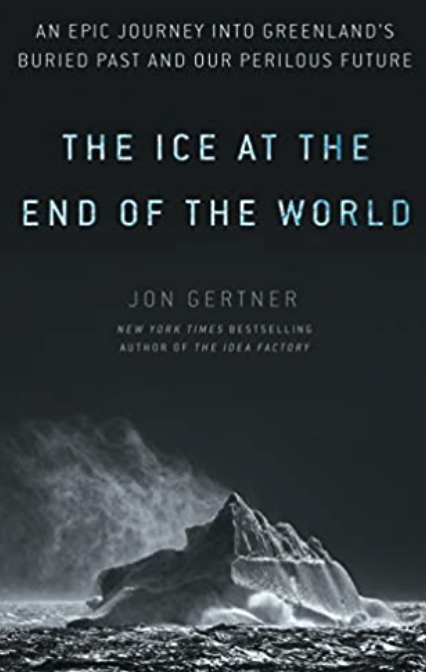
The Ice at the End of the World: An Epic Journey into Greenland's Buried Past and Our Perilous Future
A compelling account of scientists exploring Greenland's melting ice sheet, revealing crucial insights into climate change.
About The Ice at the End of the World: An Epic Journey into Greenland's Buried Past and Our Perilous Future
A riveting, urgent account of the explorers and scientists racing to understand the rapidly melting ice sheet in Greenland, a dramatic harbinger of climate change “Jon Gertner takes readers to spots few journalists or even explorers have visited. The result is a gripping and important book.”—Elizabeth Kolbert, Pulitzer Prize–winning author of _The Sixth Extinction_ NAMED ONE OF THE BEST BOOKS OF THE YEAR BY _The Washington Post _• _The Christian Science Monitor _• _Library Journal_ Greenland: a remote, mysterious island five times the size of California but with a population of just 56,000. The ice sheet that covers it is 700 miles wide and 1,500 miles long, and is composed of nearly three quadrillion tons of ice. For the last 150 years, explorers and scientists have sought to understand Greenland—at first hoping that it would serve as a gateway to the North Pole, and later coming to realize that it contained essential information about our climate. Locked within this vast and frozen white desert are some of the most profound secrets about our planet and its future. Greenland’s ice doesn’t just tell us where we’ve been. More urgently, it tells us where we’re headed. In _The Ice at the End of the World,_ Jon Gertner explains how Greenland has evolved from one of earth’s last frontiers to its largest scientific laboratory. The history of Greenland’s ice begins with the explorers who arrived here at the turn of the twentieth century—first on foot, then on skis, then on crude, motorized sleds—and embarked on grueling expeditions that took as long as a year and often ended in frostbitten tragedy. Their original goal was simple: to conquer Greenland’s seemingly infinite interior. Yet their efforts eventually gave way to scientists who built lonely encampments out on the ice and began drilling—one mile, two miles down. Their aim was to pull up ice cores that could reveal the deepest mysteries of earth’s past, going back hundreds of thousands of years. Today, scientists from all over the world are deploying every technological tool available to uncover the secrets of this frozen island before it’s too late. As Greenland’s ice melts and runs off into the sea, it not only threatens to affect hundreds of millions of people who live in coastal areas. It will also have drastic effects on ocean currents, weather systems, economies, and migration patterns. Gertner chronicles the unfathomable hardships, amazing discoveries, and scientific achievements of the Arctic’s explorers and researchers with a transporting, deeply intelligent style—and a keen sense of what this work means for the rest of us. The melting ice sheet in Greenland is, in a way, an analog for time. It contains the past. It reflects the present. It can also tell us how much time we might have left.