Joining a climate activist group is one of the most effective climate actions. Unlike voting for climate-focused parties, climate activist groups try to accelerate political action by putting pressure on leaders. Sometimes it can feel that climate activist groups want to "take something away" from people. The truth is, they follow the scientific consensus and try to find ways to avoid the worst effects of climate change (which will derail the global economy and life as we know it if we don't act). When you look closely, many of the sustainable alternatives needed for a sustainable and just world like great public transport everywhere, long-distance high-speed trains, heat pumps or even bike friendly cities will improve the life for everyone. Just and fair also means that these changes are made step by step and with low income households and rural areas in mind. They will most likely get more support. There are multiple activism groups to choose from. Some try to disrupt the status quo, some create momentum via political advocacy campaigns or referenda and others try to increase dialogue or try to advance climate solutions on a community level, many have a specific focus like mobility or climate action. ALL of the groups are useful and move the needle in important ways. Choose your pick:)
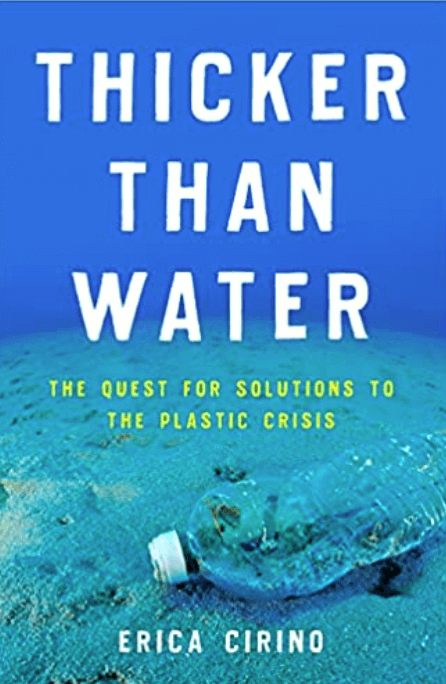
Thicker Than Water: The Quest for Solutions to the Plastic Crisis
"Explore Erica Cirino's journey uncovering the truth about plastic pollution, its global impact, and the quest for solutions in 'Thicker Than Water.'"
About Thicker Than Water: The Quest for Solutions to the Plastic Crisis
Much of what you’ve heard about plastic pollution may be wrong. Instead of a great island of trash, the infamous Great Pacific Garbage Patch is made up of manmade debris spread over hundreds of miles of sea—more like a soup than a floating garbage dump. Recycling is more complicated than we were taught: less than nine percent of the plastic we create is reused, and the majority ends up in the ocean. And plastic pollution isn’t confined to the open ocean: it’s in much of the air we breathe and the food we eat. In _Thicker Than Water: The Quest for Solutions to the Plastic Crisis_, journalist Erica Cirino brings readers on a globe-hopping journey to meet the scientists and activists telling the real story of the plastic crisis. From the deck of a plastic-hunting sailboat with a disabled engine, to the labs doing cutting-edge research on microplastics and the chemicals we ingest, Cirino paints a full picture of how plastic pollution is threatening wildlife and human health. _Thicker Than Water_ reveals that the plastic crisis is also a tale of environmental injustice, as poorer nations take in a larger share of the world’s trash, and manufacturing chemicals threaten predominantly Black and low-income communities. There is some hope on the horizon, with new laws banning single-use items and technological innovations to replace plastic in our lives. But Cirino shows that we can only fix the problem if we face its full scope and begin to repair our throwaway culture. _Thicker Than Water_ is an eloquent call to reexamine the systems churning out waves of plastic waste.
Related on Climesumer
Everything else on the site connected to Thicker Than Water: The Quest for Solutions to the Plastic Crisis.
Climate actions
Steps this helps you take.
Speak up and get others to join in taking action. It's one of the quickest and most effective ways to make a difference. Talk to your neighbors, colleagues, friends, and family. Let business owners know you support bold changes. Appeal to local and world leaders to act now. Climate action is a task for all of us. And it concerns all of us. No one can do it all alone – but we can do it together.
Eliminating single-use plastic products from your bathroom reduces plastic pollution in oceans and landfills, protecting marine life, and conserving resources while promoting a healthier ecosystem.
This action involves choosing products that can be reused multiple times over disposable alternatives that contribute to landfill and pollution. Here are the key benefits and actions involved: 1. Reduces Waste: By opting for multi-use products, you contribute to a significant reduction in the amount of waste that ends up in landfills and oceans. Single-use products, particularly plastics, are a major source of environmental pollution. 2. Lowers Carbon Footprint: The production, transportation, and disposal of single-use items consume energy and resources, emitting greenhouse gases. Multi-use products, on the other hand, have a lower carbon footprint over their lifecycle due to reduced frequency of production and disposal. 3. Saves Money: Although multi-use items may have a higher upfront cost, they save money in the long run by reducing the need for frequent replacements. The mantra here is: Quality over quantity. In order for these benefits to be true, the multi use product needs to be used for a longer time.
In the Climate Guide
The lessons that put this in context.
The whole guide →