Land Gap Report 2022
This report looks at how Governments are using land in climate pledges. An international team analyzed commitments made for years 2030, 2050, and 2060 — looking at individual pledges and the implications for land use.
About Land Gap Report 2022
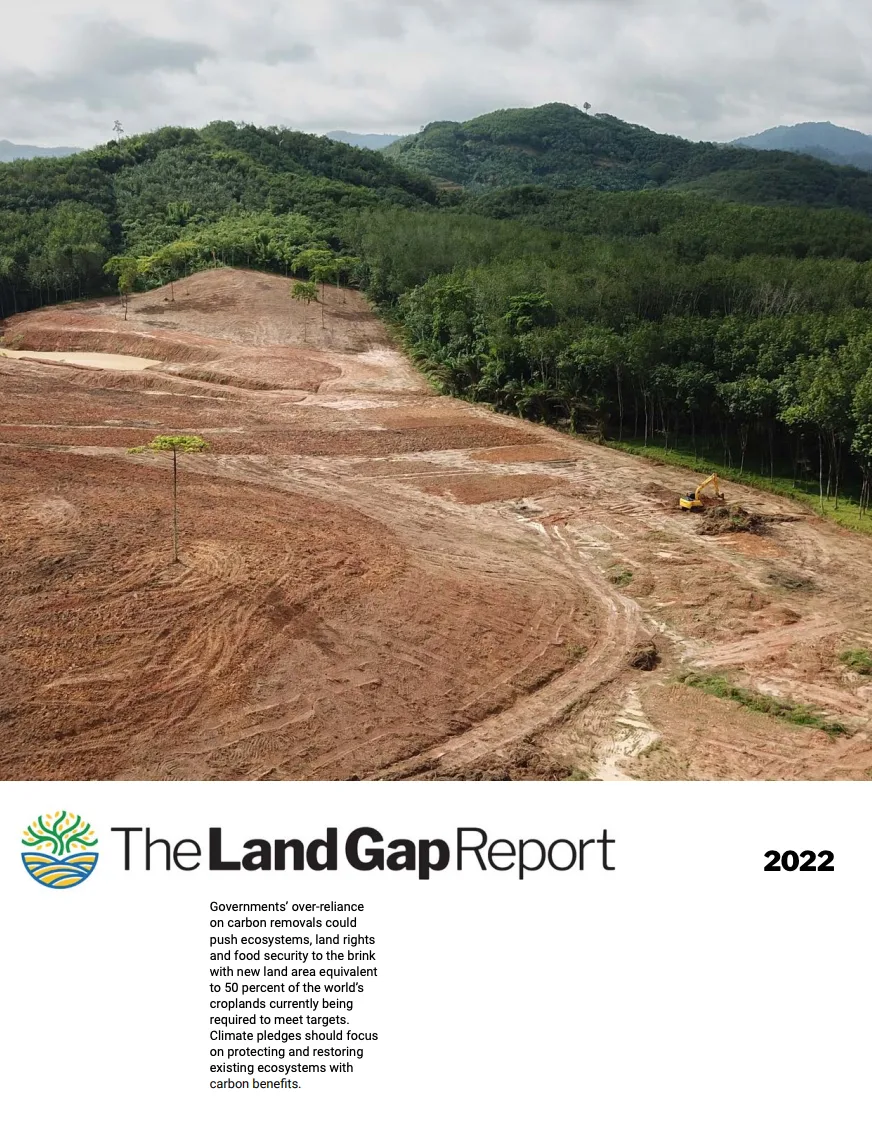
Governments’ over-reliance on carbon removals could push ecosystems, land rights and food security to the brink with new land area equivalent to 50 percent of the world’s croplands currently being required to meet targets. Climate pledges should focus on protecting and restoring existing ecosystems with carbon benefits. This Report shows that countries’ climate pledges rely on unrealistic amounts of land-based carbon removal. These cannot be achieved without significant negative impacts on livelihoods, land rights, and ecosystems. Our research suggests that countries should seek to reduce their expected reliance on land-based carbon removal and must instead make much deeper cuts in emissions. The Land Gap Report also examines the importance of protecting all remaining primary ecosystems; securing land rights for communities; and shifting to agroecology in food production. The Land Gap Report shows how implementation of countries’ climate plans increases total demand for land. The Report quantifies this aggregate demand for land and land-use change to address climate mitigation in the climate pledges submitted by countries to the UNFCCC.