1/3 of the food we produce is being wasted or lost in the process along the value chain. Consumers are one part of the puzzle. Try to plan your meals, use opened items from your fridge quickly and pay special attention to animal products. Wasting animal products like meat or dairy uses the most resources in production and therefore has a big impact when not wasted. Ideally reduce meat and dairy products to a minimum.
Mill Food Recycler
Effortless to use. Intelligent tech. The food recycler designed for your life.
About Mill Food Recycler
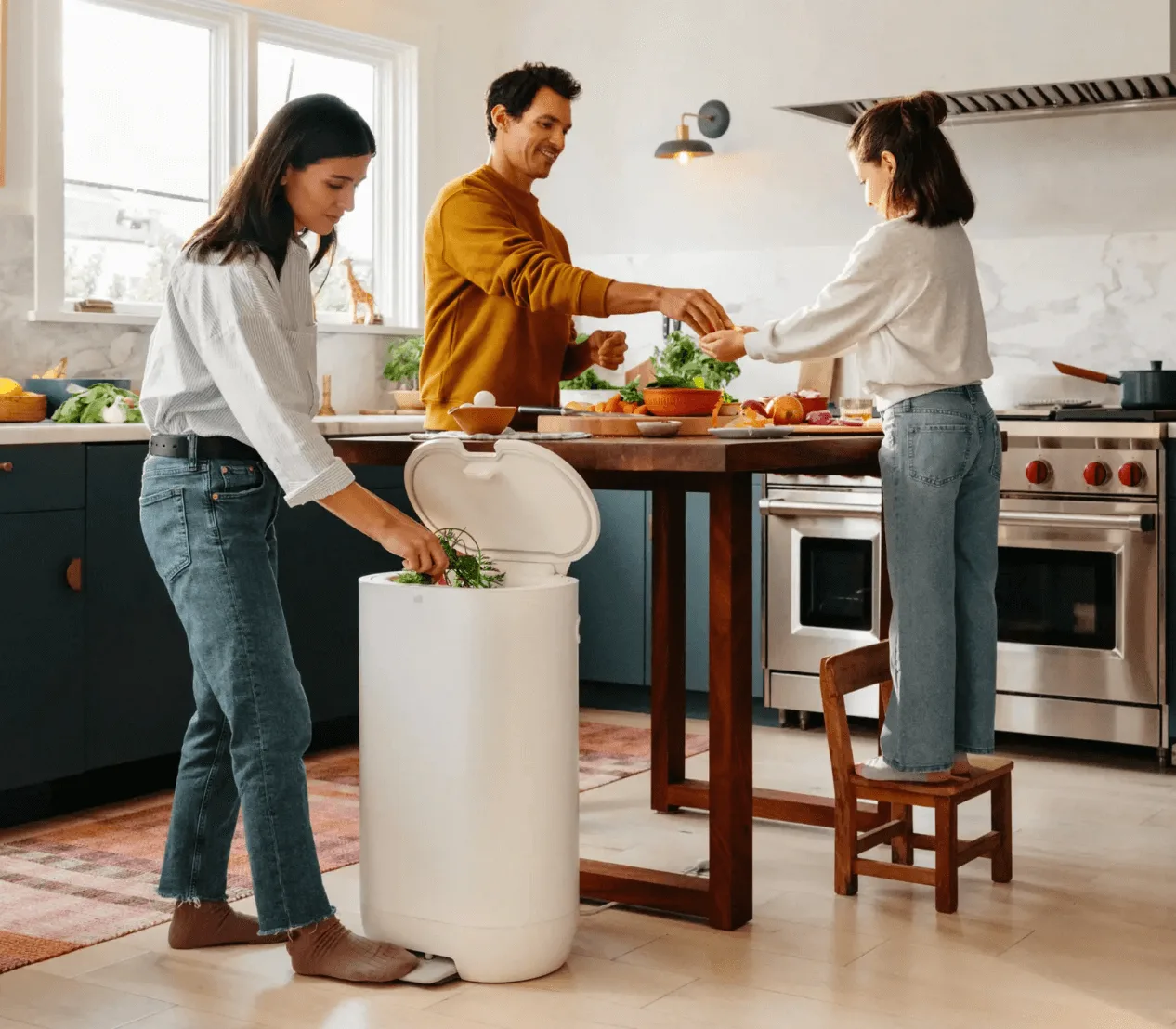
Powerful dry & grind system The dual grinding system effortlessly handles everything from small bones to avocado pits. The aluminum bucket conducts heat for an ultra-fast dry time. Food volume is reduced by 80% and with a generous 6.5L capacity, it can process around 40lbs of wet food. Which means you won’t have to empty it for weeks. ### Intelligent cycles The only food recycler that adapts to your needs. Smart run times are designed to be energy efficient based on how much food you put in. Mill uses integrated sensors and custom algorithms to determine the quickest runtime needed to transform your food scraps into dry grounds. This allows you to add food anytime, even mid-cycle. ### State-of-the-art odor filtration Our activated charcoal filters utilize 2 million square meters of surface area to absorb any and all odors. Even better, they’re made from upcycled coconut shells, typically considered a waste item. Each refill lasts for up to a year, depending on use. So your kitchen never smells.
Related on Climesumer
Everything else on the site connected to Mill Food Recycler.
Climate actions
Steps this helps you take.
The type of food you buy is more important than how it was produced or where or when it was grown. Buying (non-organic) vegetables flown in, is better than buying (organic), local meat or dairy. The food miles only make about 5-20% of the food's emissions. This being said, if you have the choice, try to buy organic, local, seasonal vegan food for maximum impact.
In the Climate Guide
The lessons that put this in context.
The whole guide →